Natural Slate
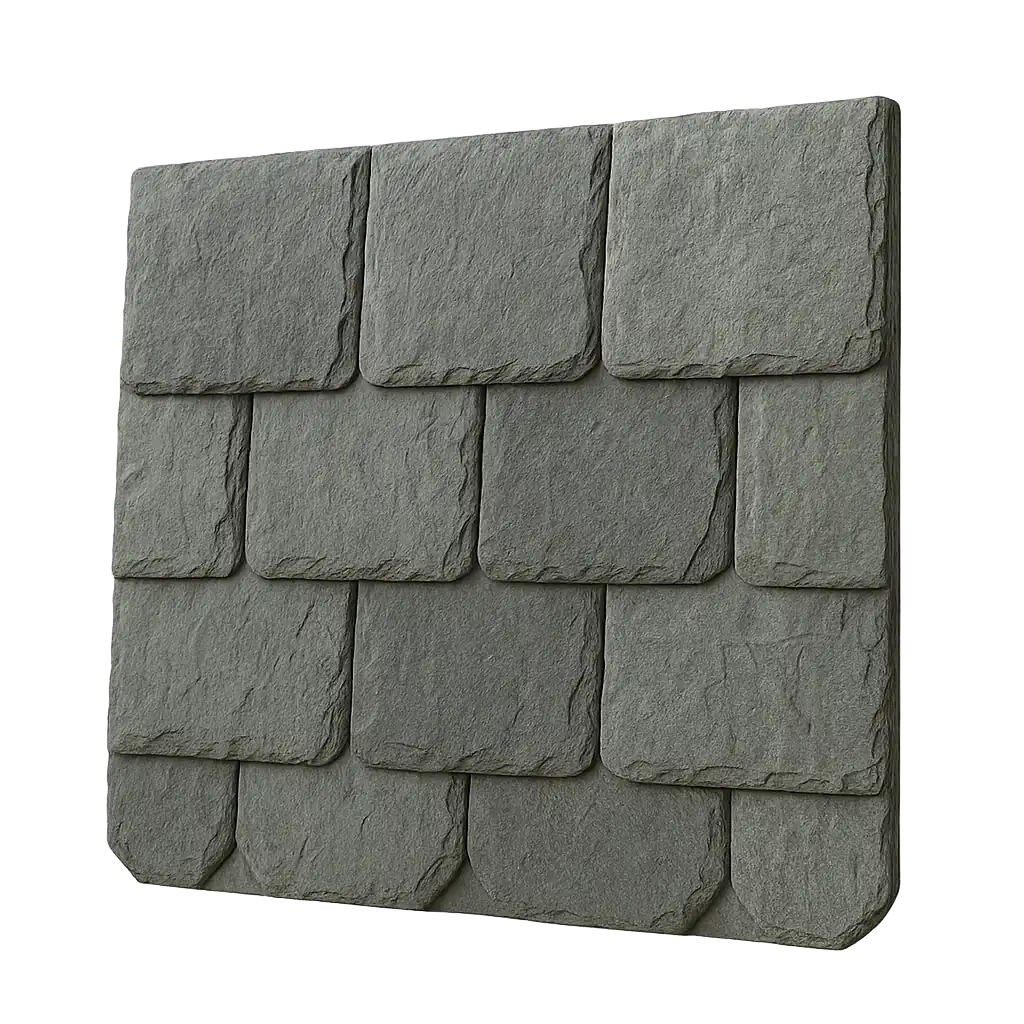
Timeless elegance and unmatched longevity.
 Skip to content
Timeless elegance and unmatched longevity.
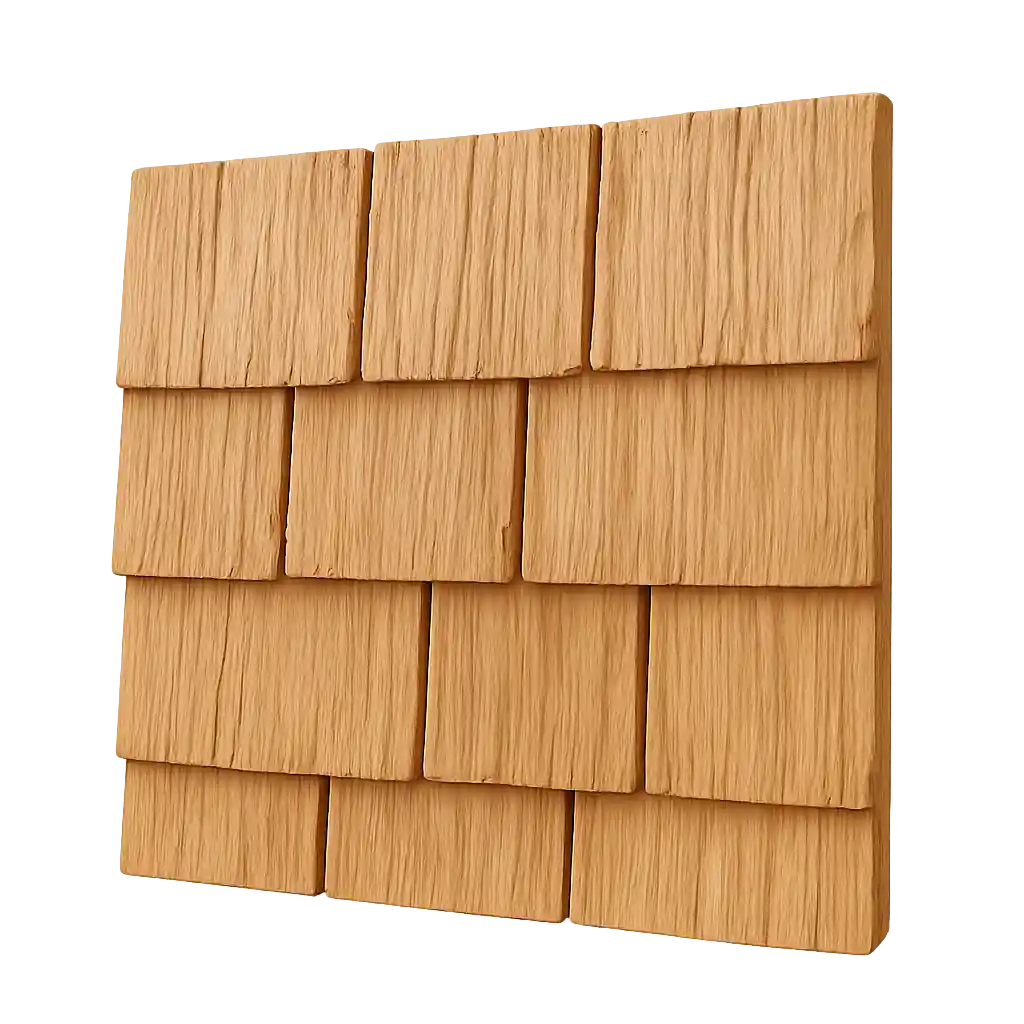
Rustic warmth with natural insulation.
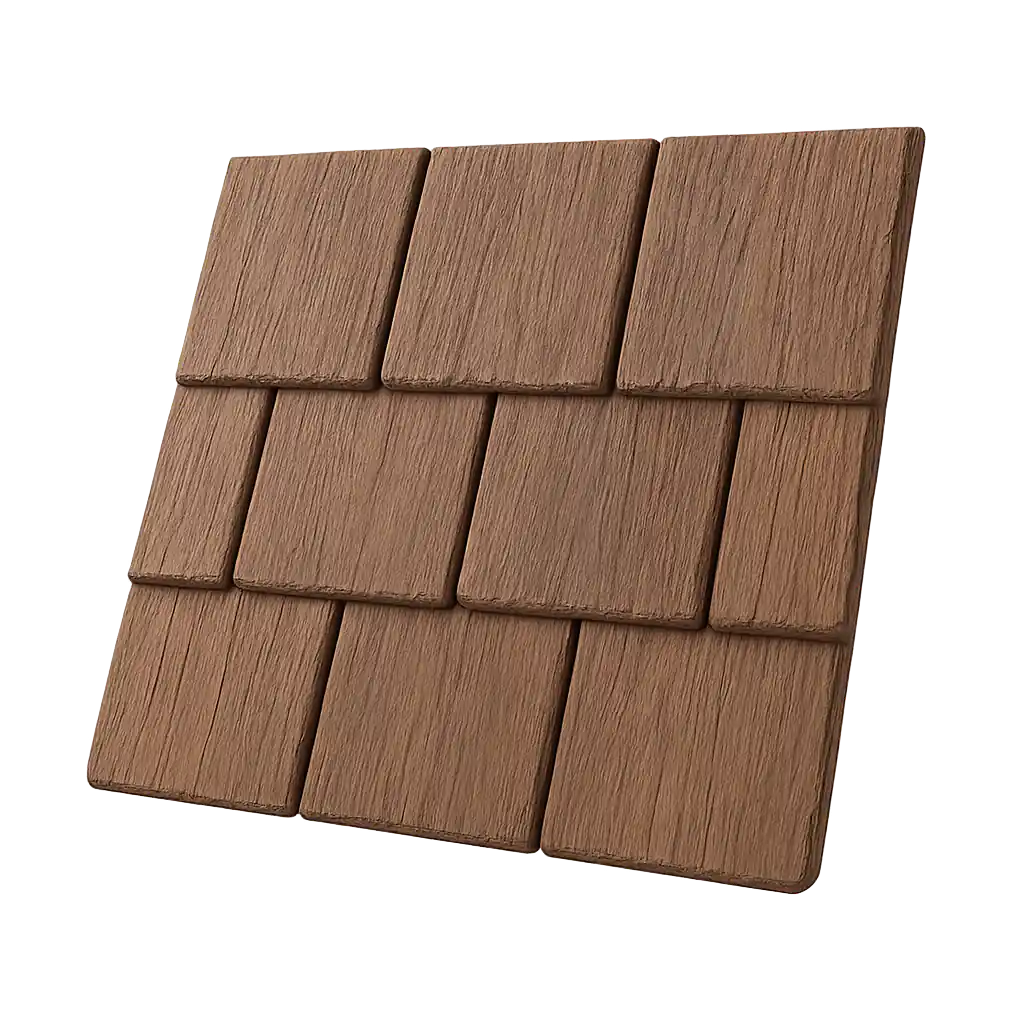
Slate & shake looks, modern performance.
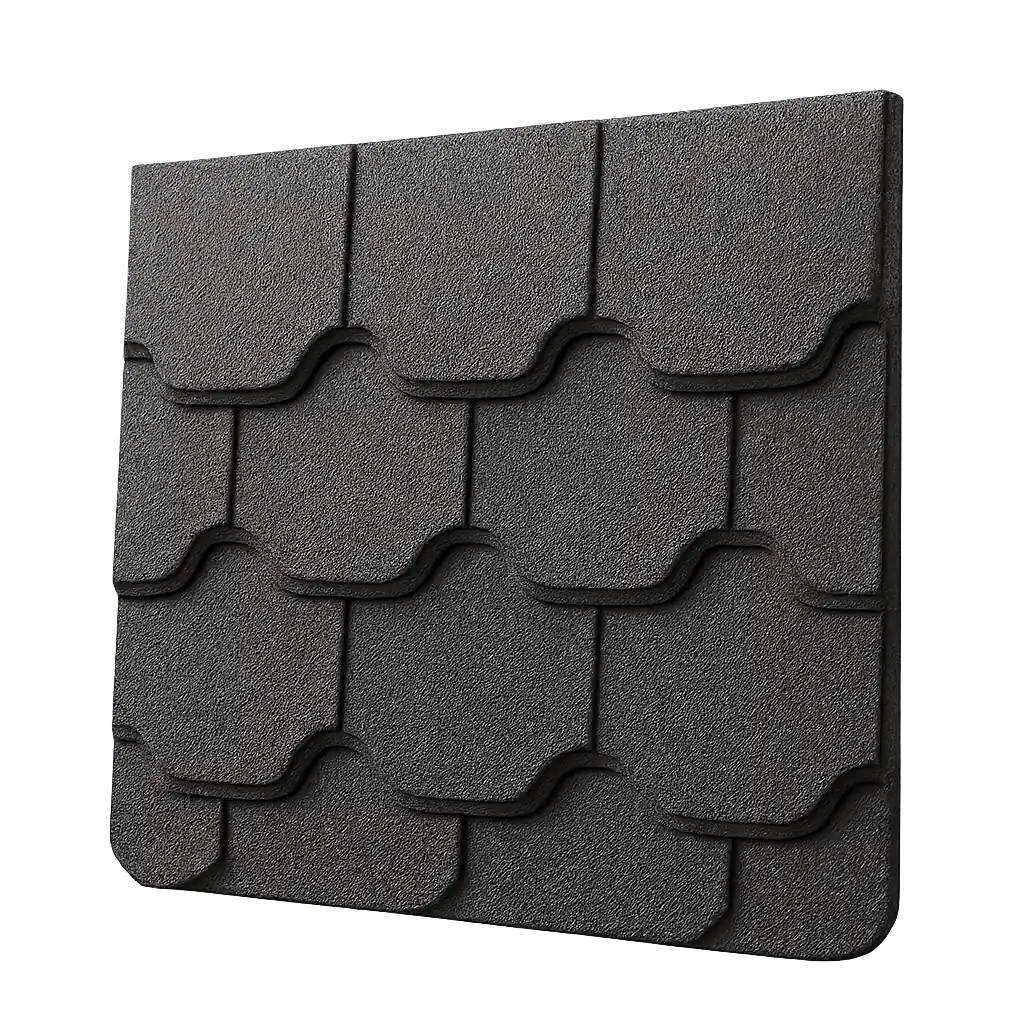
Architectural shingles with slate-like appeal.
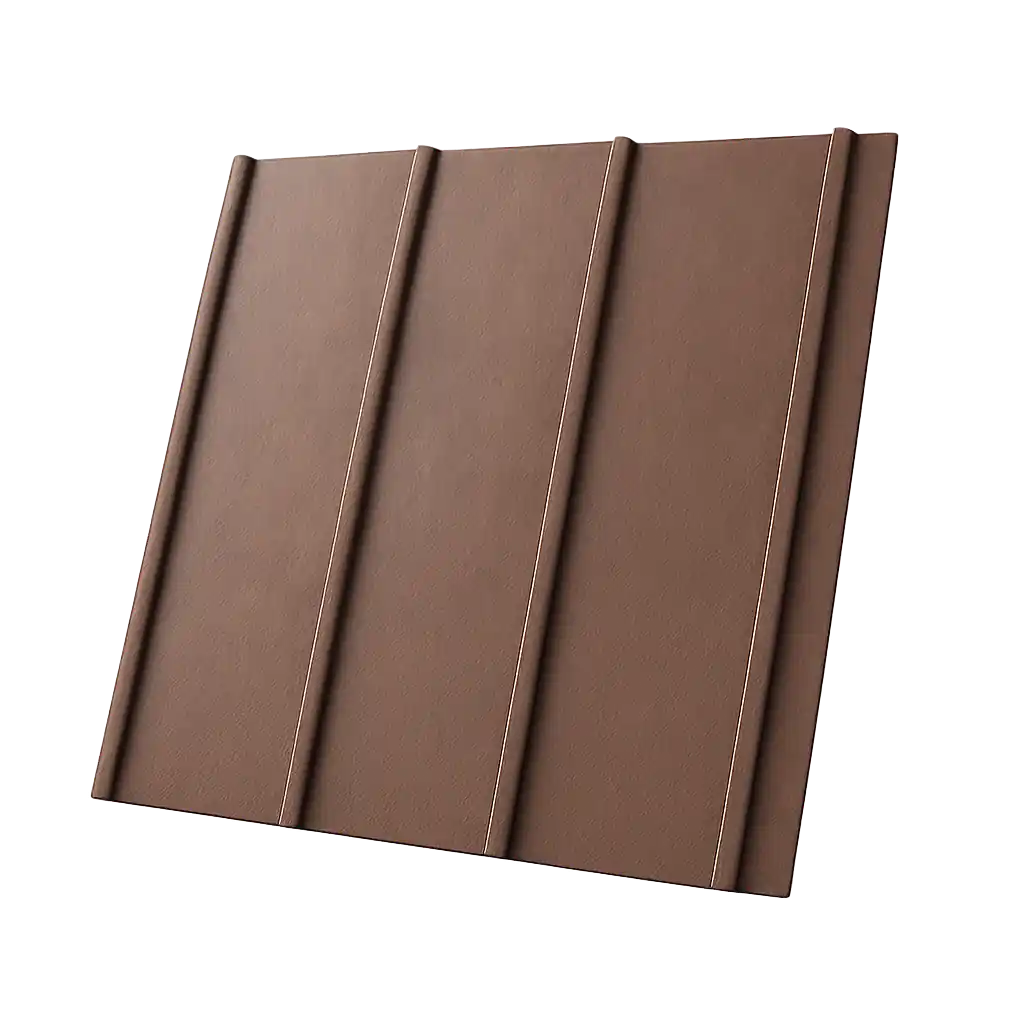
Energy-efficient, modern, and long-lasting.
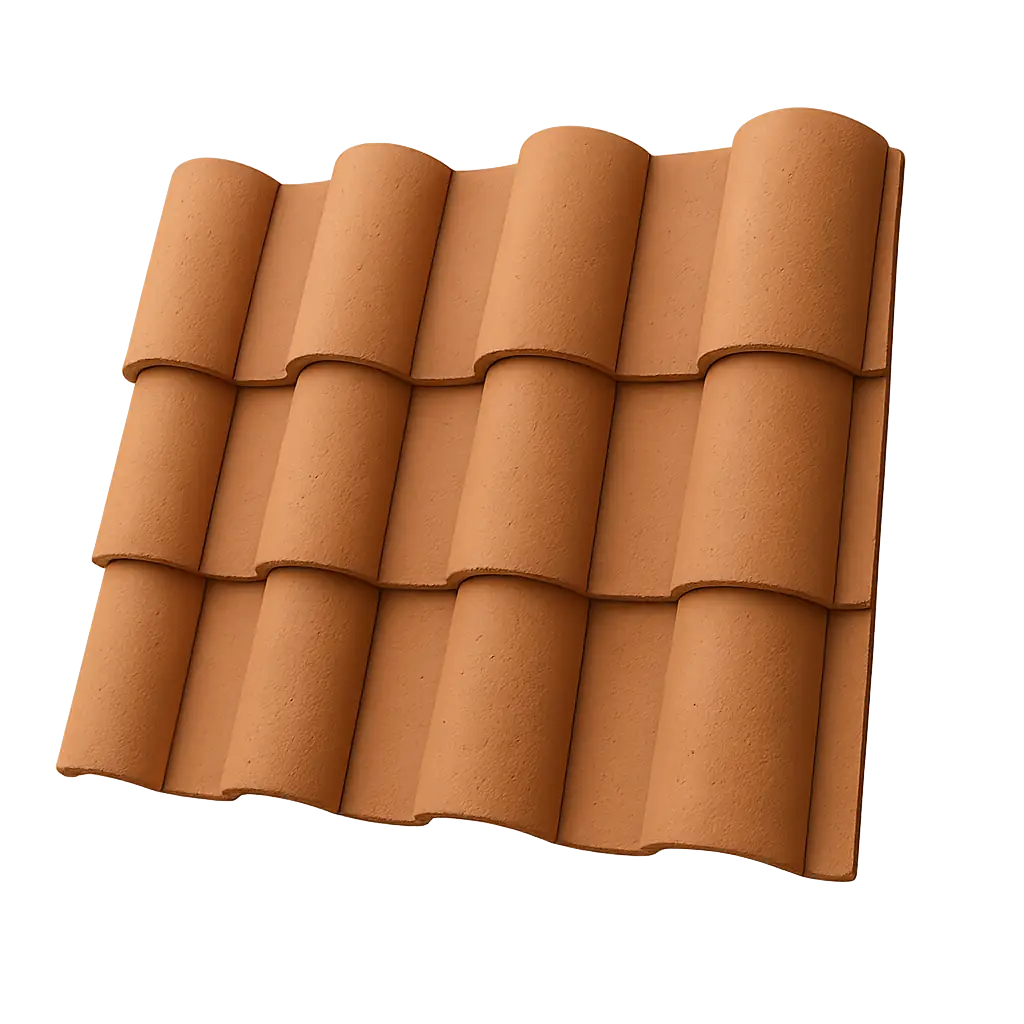
Mediterranean beauty, natural fire resistance.
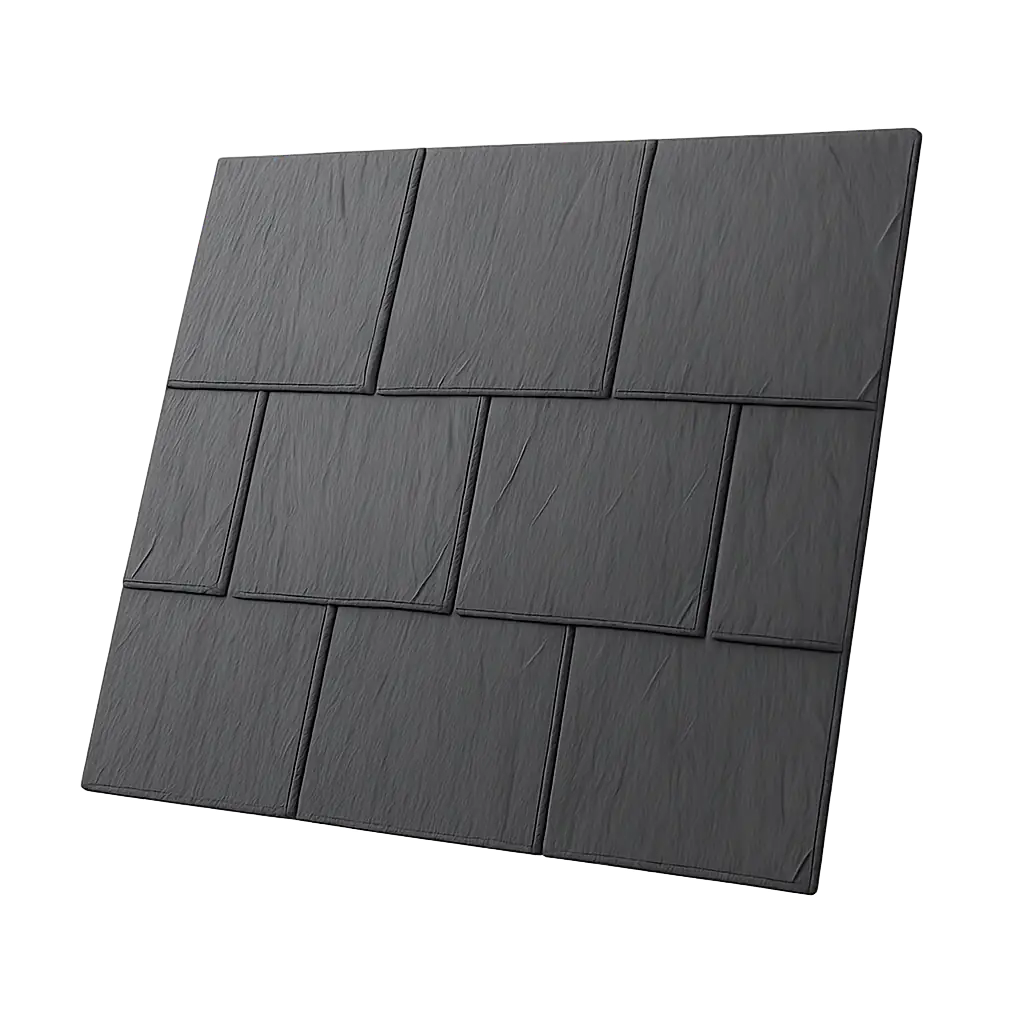
Lightweight durability with classic charm.
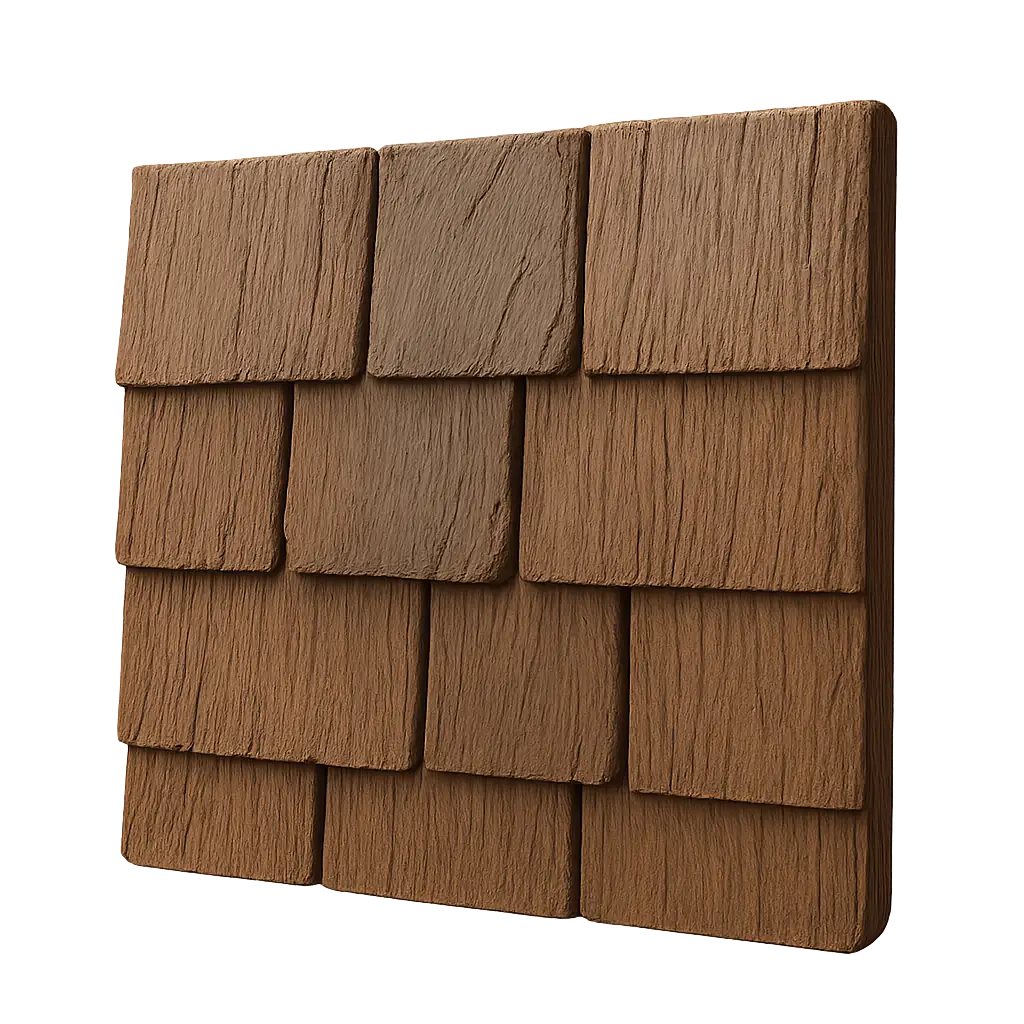
Wood shake appearance, no rot or warping.

The gold standard for low-slope protection.

Eco-friendly composites with authentic detail
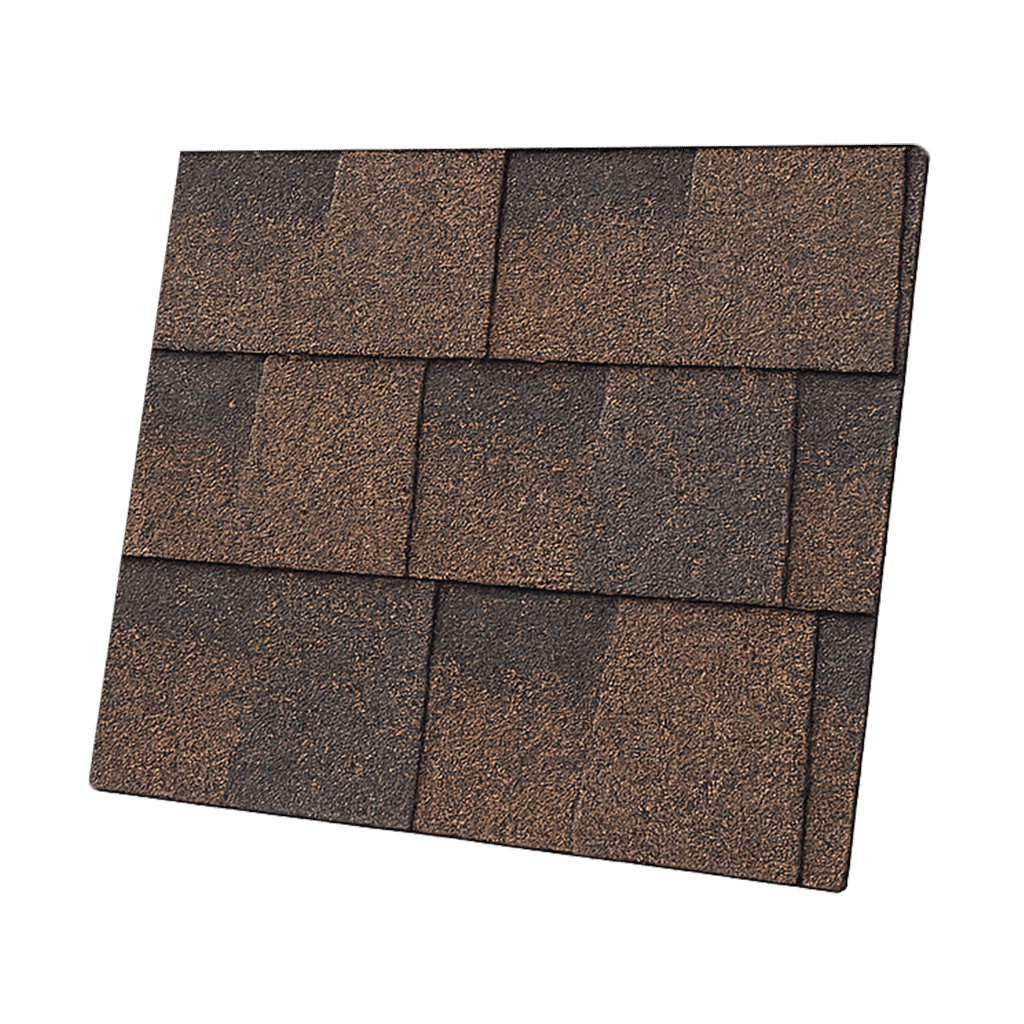
Classic layered look, durable protection.
Share
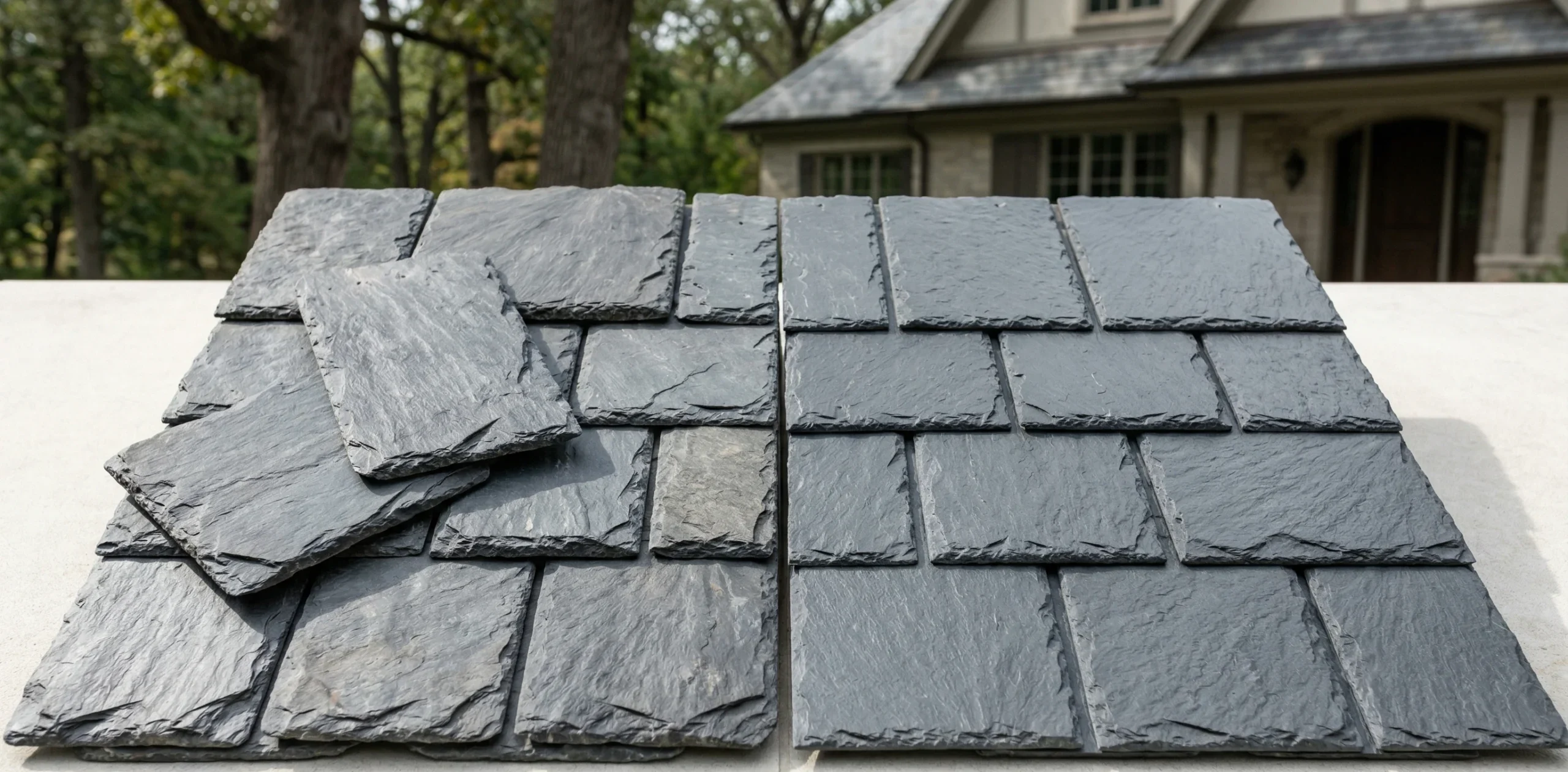
Natural slate is the longest-lasting residential roofing material available. A properly installed slate roof can perform for 75 to 150 years depending on the stone’s origin and quality. That’s not marketing. That’s documented building history across centuries of use.
Synthetic slate replicates the look of natural stone but uses engineered polymers instead. It weighs less, costs less upfront, and carries warranties ranging from 50 years to lifetime coverage.
On the surface, the choice seems straightforward: pay more for slate that lasts forever, or pay less for synthetic that lasts a very long time. But the real cost picture over 50 years involves factors that most estimates ignore.
Here’s the full comparison for homeowners in the Chicago suburbs.
Natural slate is one of the most expensive roofing materials to purchase and install. The material itself is quarried stone, which must be mined, cut, graded, sorted, and shipped. Installation requires specialized skills that most general roofing crews don’t have. The tiles are heavy (typically 800 to 1,500 pounds per square, or per 100 square feet), which means the home’s structure may need reinforcement before installation.
Synthetic slate weighs a fraction of natural stone (usually 150 to 300 pounds per square), installs with standard roofing fasteners, and doesn’t require structural modification on most homes. The material costs less per square foot, and labor is less intensive.
For a typical 3,000-square-foot roof in the Chicago suburbs:
Natural slate installation generally falls in a range that can be two to three times the cost of premium synthetic alternatives. The exact figure depends on the slate source (domestic vs. imported), the complexity of the roof, and the availability of qualified installers in the area.
Synthetic slate installation falls in a range comparable to other premium roofing products like DaVinci or Brava tiles.
The upfront gap is significant. But upfront cost is only one part of the equation.
Natural slate’s weight is its biggest practical limitation. Many homes built after 1970 were not engineered to support the load of a stone roof. Before a natural slate installation, a structural engineer typically needs to evaluate the roof framing. If reinforcement is required (additional rafters, collar ties, or re-engineering of load-bearing walls), that cost gets added to the project.
Structural reinforcement can add a meaningful percentage to the total project cost, depending on the home’s existing framing. On some older homes that were originally built with slate, the framing is already adequate, and no reinforcement is needed. On homes that were built with lighter roofing in mind, the reinforcement cost is real and unavoidable.
Synthetic slate eliminates this variable entirely. At a quarter of the weight, it installs on the same structure that supports asphalt shingles. No engineering evaluation. No reinforcement. No added cost.
A slate roof requires periodic inspection and maintenance, but the work is relatively minor compared to wood or asphalt. The most common maintenance items:
Individual tile replacement. Slate tiles can crack from impact (falling branches, severe hail, foot traffic during other roof work). Replacing individual tiles requires a skilled installer and matching stone, which can be difficult if the original quarry has closed.
Flashing maintenance. The slate itself may last 100+ years, but the copper or lead flashing around chimneys, valleys, and penetrations has a shorter lifespan. Flashing replacement is the most common major maintenance expense on an aging slate roof, and it typically occurs at the 30-to-50-year mark.
Gutter and drainage upkeep. Stone roofs shed water differently than synthetic materials. Proper gutter sizing and regular cleaning are important to prevent ice dam formation in winter.
Over 50 years, expect one to two rounds of flashing work, periodic tile replacements, and regular inspections. The cumulative cost is moderate relative to the roof’s total value.
Synthetic slate requires less hands-on maintenance than natural stone. The tiles don’t crack the same way under impact (most carry Class 4 hail ratings), and individual tile replacement is simpler because the material is consistent and available from the manufacturer.
However, synthetic slate has a shorter track record. The oldest synthetic slate installations in the Midwest are roughly 20 to 25 years old. Manufacturers project performance based on accelerated weathering tests, but we don’t yet have 50 years of real-world data.
What we do know: the tiles resist moisture absorption, UV degradation, and freeze-thaw cycling well based on the data available. Flashing and underlayment will still need attention over the roof’s lifespan, as those components don’t last as long as the tiles themselves.
Over 50 years, maintenance costs for synthetic slate are expected to be lower than natural slate, primarily because tile replacement is cheaper and less specialized.
Homeowner’s insurance rates are influenced by roofing material. Both natural and synthetic slate generally qualify for favorable ratings because of their fire resistance (both are Class A) and impact resistance (Class 4).
Where the two differ: some insurance companies offer additional discounts for impact-resistant roofing in hail-prone areas, which applies to both products. But natural slate’s superior fire resistance and longevity sometimes qualify it for the lowest available rate categories.
The insurance cost difference between the two materials over 50 years is relatively small for most homeowners, but it’s worth asking your insurer about specific credits for each material before making a decision.
A natural slate roof is a prestige feature. In affluent suburbs like Kenilworth, Winnetka, and Lake Forest, a slate roof signals permanence, quality, and investment. Real estate agents in these markets often highlight a slate roof as a selling point.
Synthetic slate is gaining recognition but doesn’t yet carry the same cachet with luxury home buyers. A well-installed synthetic slate roof from a known brand (DaVinci, Brava) is viewed positively, but it doesn’t trigger the same response as “100-year natural slate” in a listing description.
Over the next 50 years, this perception gap may narrow as synthetic products build a longer performance record. But today, natural slate holds a measurable advantage in buyer perception at the highest end of the market.
Here’s where natural slate pulls ahead in the 50-year comparison.
At the 50-year mark, a natural slate roof is likely halfway through its functional life. The tiles themselves may need no replacement. Flashing and underlayment may need one more round of service. But the roof system as a whole is still performing.
At the 50-year mark, a synthetic slate roof is approaching or reaching the end of its warranted lifespan. If the manufacturer’s projection holds, the tiles may still be functional. But you’re entering the territory where replacement planning becomes a conversation.
If you extend the comparison to 75 or 100 years:
Natural slate: Still performing. Maintenance costs continue, but no full replacement needed.
Synthetic slate: One full replacement likely required, at whatever the future cost of materials and labor turns out to be.
That second installation cost, 30 to 50 years from now, closes or eliminates the upfront savings of choosing synthetic.
Choose natural slate if: You plan to stay in the home long-term (or your family will), the home’s structure supports the weight (or you’re willing to reinforce it), you value the prestige and permanence of real stone, and you’re making a multi-generational investment.
Choose synthetic slate if: You want the slate aesthetic without the structural requirements, you’re planning to live in the home for 20 to 30 years rather than 50+, upfront budget is a significant factor, or the home’s architecture calls for a lighter material.
Both are excellent roofing products. The right choice depends on your timeline, your home’s structure, and how you think about long-term value.
Want to see both materials and talk through the specifics for your home? Schedule a consultation and we’ll walk you through the options in person.
Timeless elegance and unmatched longevity.
Rustic warmth with natural insulation.
Slate & shake looks, modern performance.
Architectural shingles with slate-like appeal.
Energy-efficient, modern, and long-lasting.
Mediterranean beauty, natural fire resistance.
Lightweight durability with classic charm.
Wood shake appearance, no rot or warping.
The gold standard for low-slope protection.
Eco-friendly composites with authentic detail
Classic layered look, durable protection.